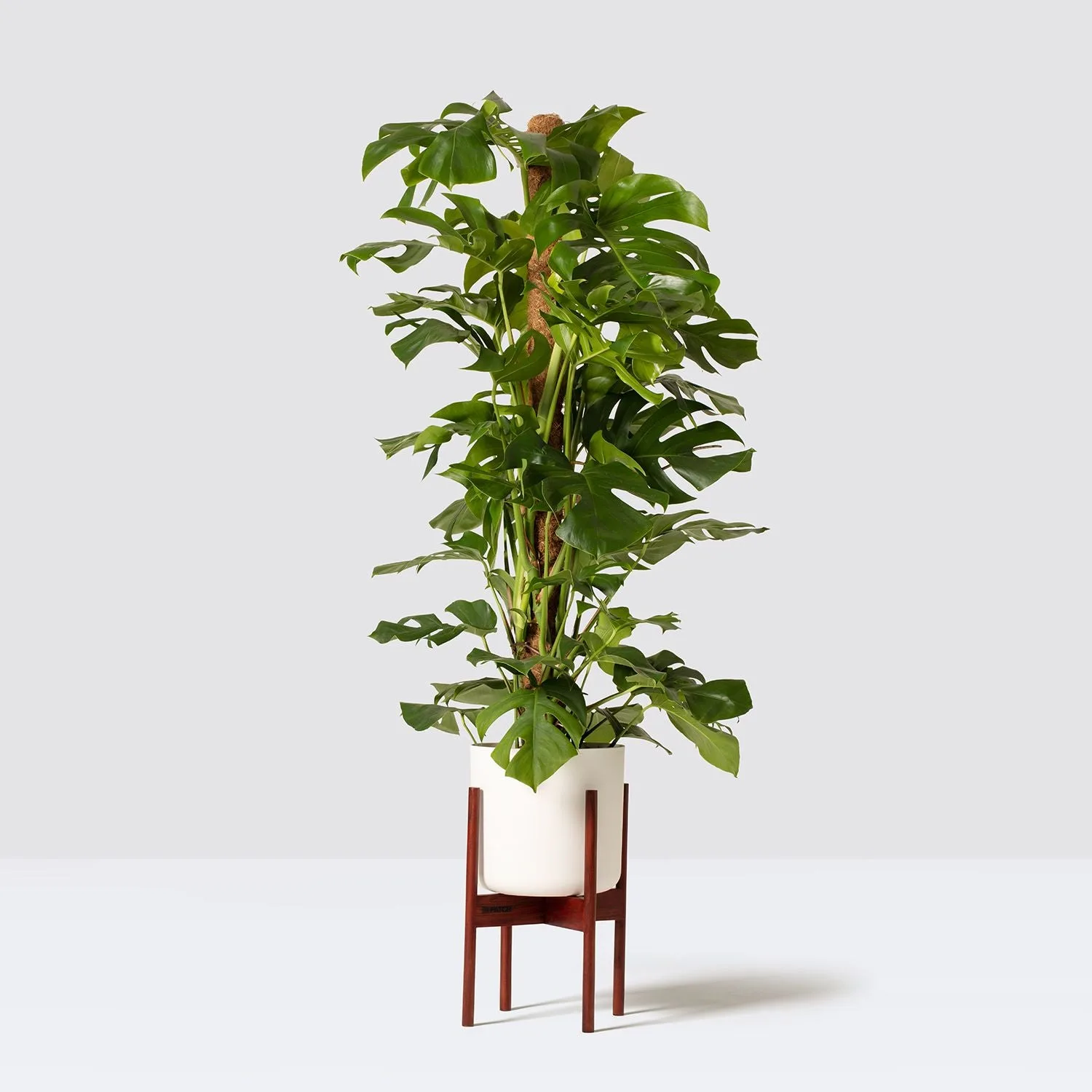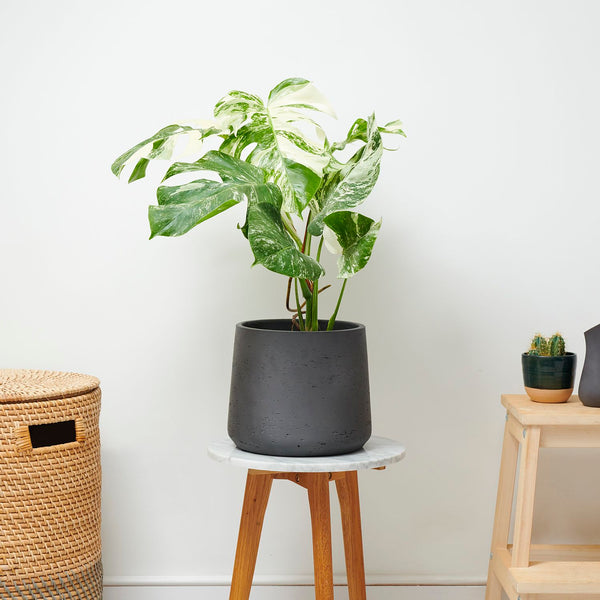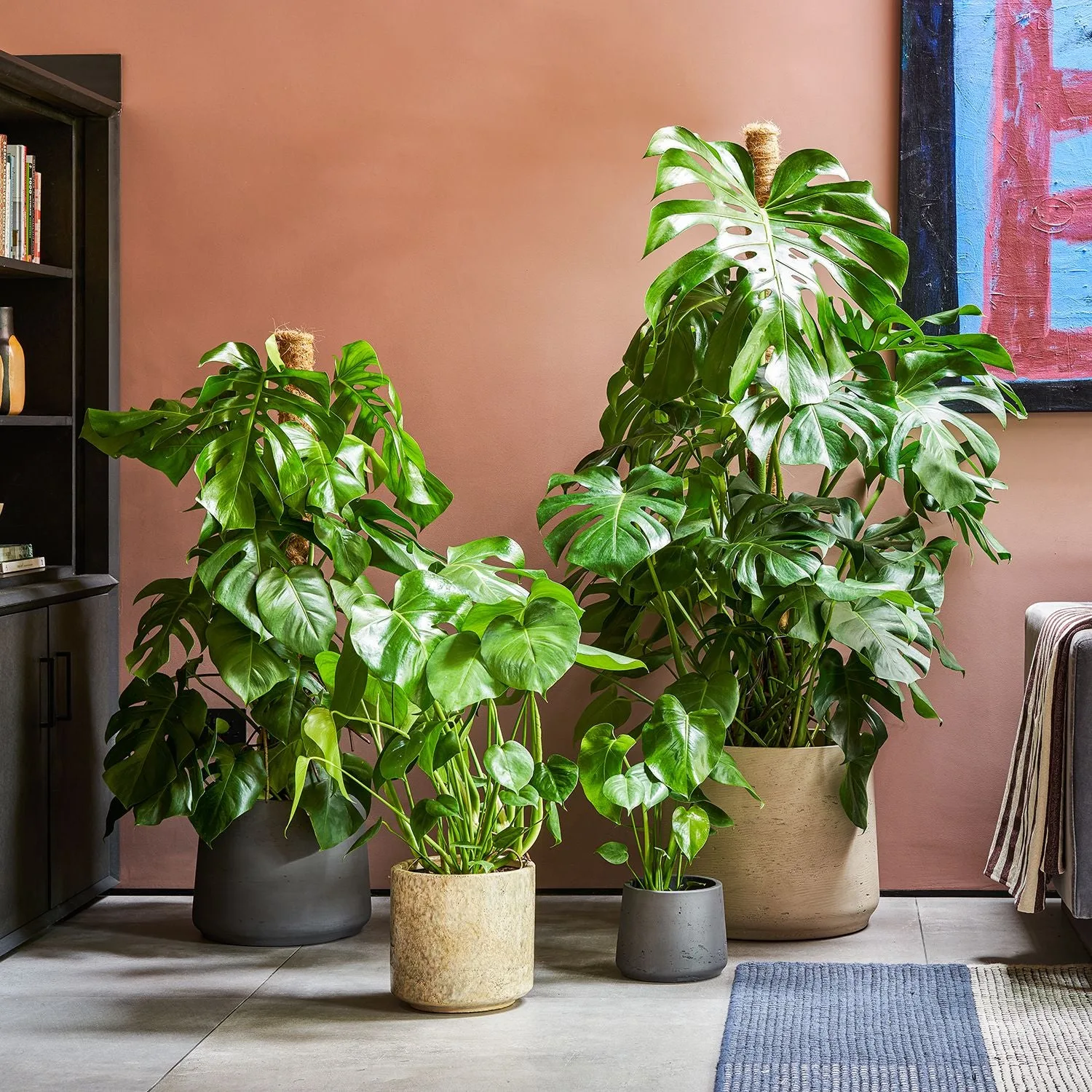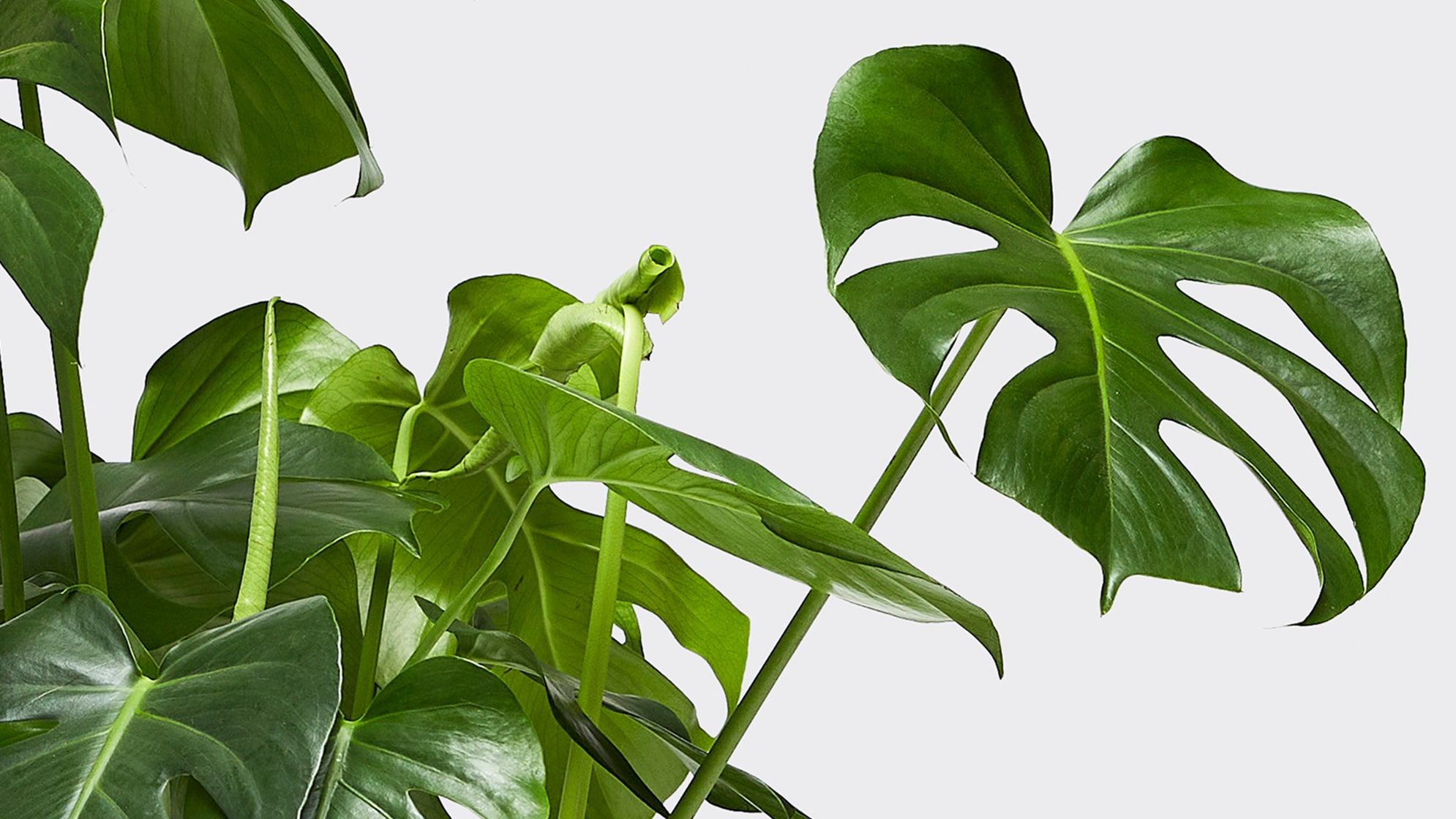
The Swiss cheese plant is a Patch favourite for good reason — it’s dramatic, fast-growing and genuinely easy. Those iconic holes (fenestrations) develop as the plant matures and gets enough light, and with a little support it’ll happily climb into a real showstopper.
About the Swiss cheese plant
Monstera deliciosa hails from the rainforests of Central America, where it climbs up tree trunks towards the light using aerial roots. The famous splits and holes in its leaves are thought to help wind and light pass through to the leaves below. Indoors it’s a long-lived, forgiving plant that just keeps getting more impressive.
How much light does my Swiss cheese plant need?
Bright, indirect light is ideal and encourages those signature holes. A spot near a bright window, out of harsh midday sun, is perfect. In low light it survives but grows slowly, with smaller, plainer leaves and fewer splits; too much direct sun can scorch it.
How often should I water my Swiss cheese plant?
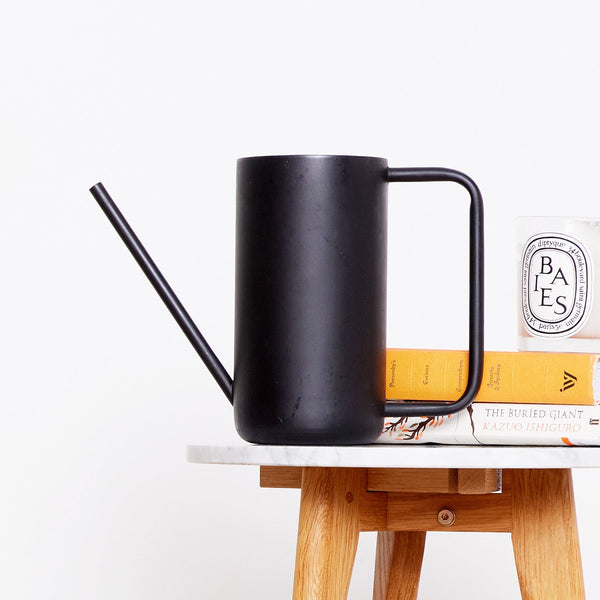
Water when the top 2–3cm of soil feels dry, usually about once a week in summer and less in winter. Soak it until water runs from the base, let it drain, and never leave it standing in water. Yellowing leaves usually mean it’s been overwatered.
Does my Swiss cheese plant need support?
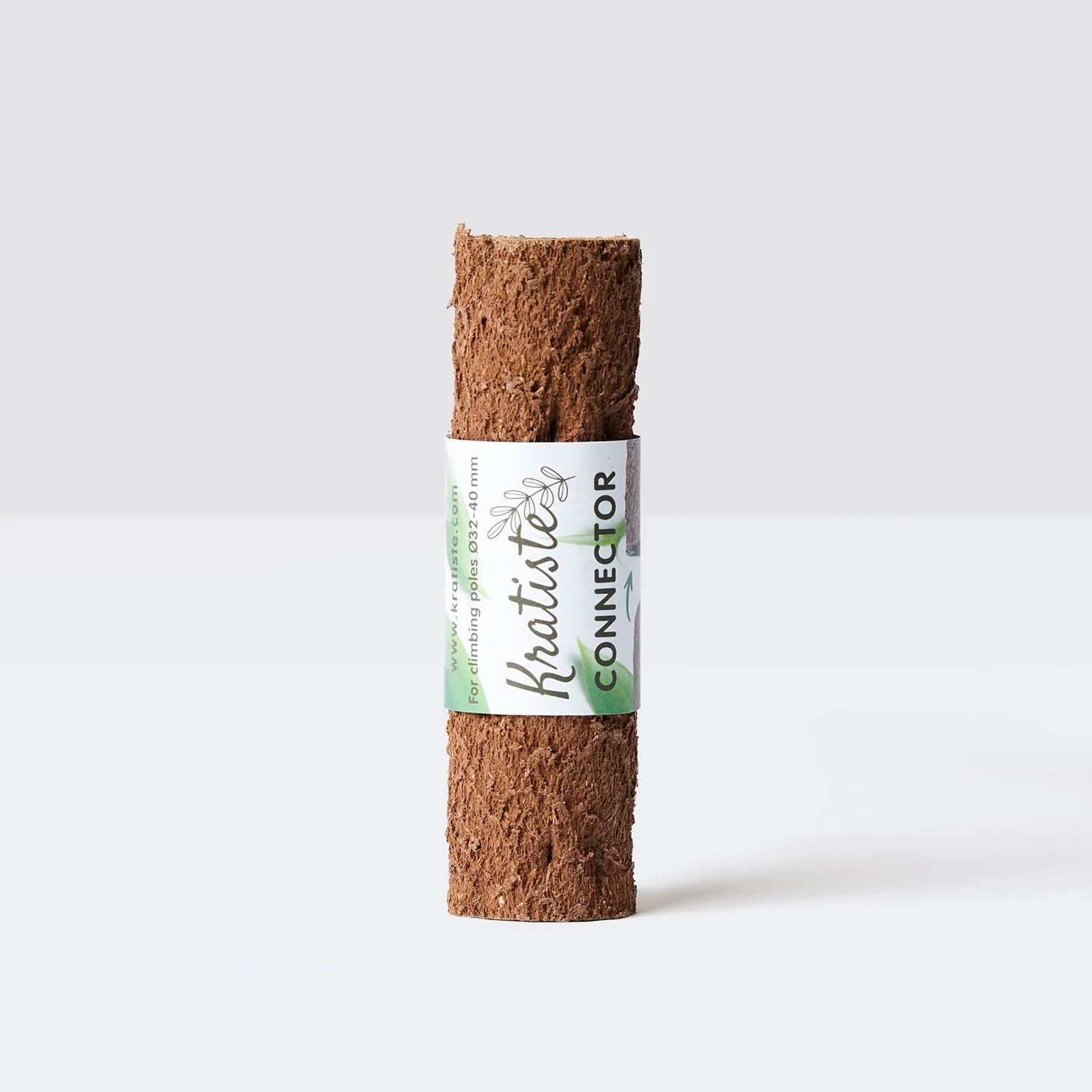
It loves to climb. Adding a moss pole or trellis gives the aerial roots something to grip and encourages bigger, more fenestrated leaves as it grows upwards. Gently tie new growth to the support, and tuck stray aerial roots into the pole or the pot.
What's the best temperature for my Swiss cheese plant?
Normal room temperature between 18 and 27°C is ideal. It enjoys a little humidity and dislikes the cold — keep it above about 15°C and away from cold draughts.
Is my Swiss cheese plant toxic?
Yes, mildly. The leaves contain calcium oxalate crystals that irritate the mouth and stomach if chewed, so it’s best kept out of reach of pets and small children.
When should I repot my Swiss cheese plant?
Repot every couple of years, or when roots start to circle or poke out of the base, moving up one pot size in spring. Use a rich, well-draining peat-free mix, and add a moss pole at the same time if it doesn’t already have one.