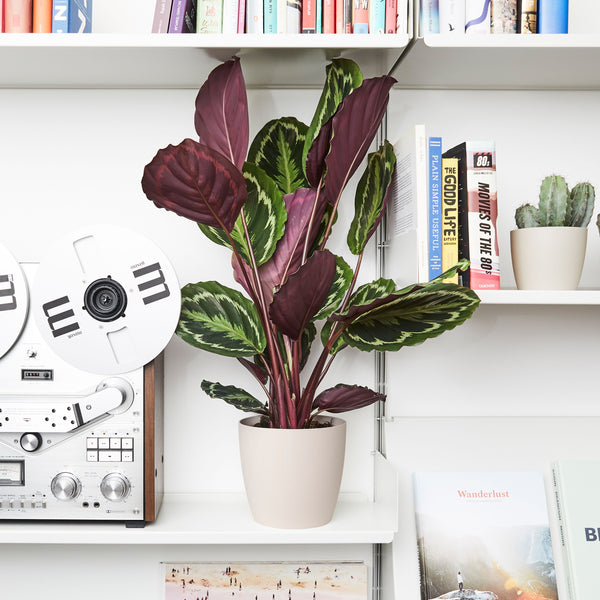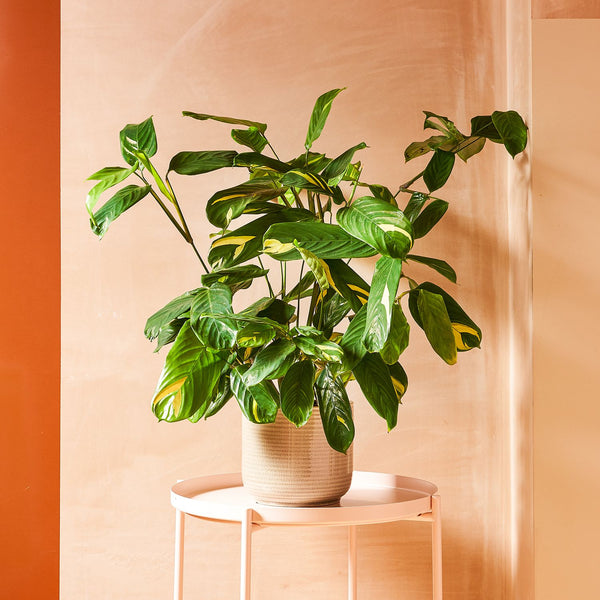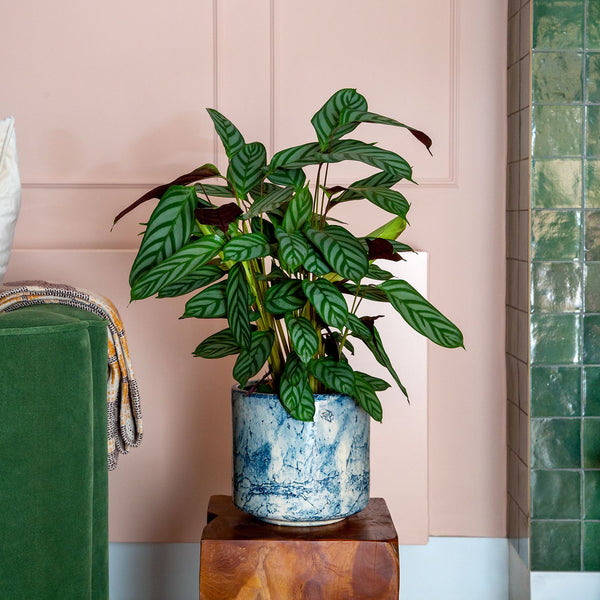
Ctenanthe (a ‘never-never plant’) is grown for its beautifully patterned foliage, banded in two-tone green with wine-red undersides. Like its prayer-plant cousins it raises and lowers its leaves through the day, and it rewards a bit of attention to humidity and watering with lush, healthy growth.
About Ctenanthe ‘Compactstar’
Ctenanthe comes from the humid rainforests of Brazil, where it grows in the warm, shady understorey. ‘Compactstar’ stays neat and bushy, with upright, brush-marked leaves that flush purple underneath. The nightly folding of the leaves — the ‘prayer’ movement — is completely normal and a sign of a happy plant.
How much light does my ctenanthe need?
Bright, indirect light is essential. A few metres from a bright window, or beside a north or east-facing one, is ideal. Direct sun bleaches the markings and crisps the edges, while deep shade dulls the colours and slows growth.
How often should I water my ctenanthe?
Keep the soil lightly and evenly moist — water when the very top starts to dry, so it never dries out completely or sits waterlogged. It’s fussy about water quality, so use filtered, rain or distilled water where you can, since fluoride and salts in tap water can brown the leaf tips. Ease off in winter.
Does my ctenanthe need humidity?
Yes — this is the make-or-break for a happy ctenanthe. Dry air causes crispy brown edges. Mist it regularly, stand it on a tray of damp pebbles, group it with other plants, or grow it in a naturally humid bathroom or kitchen. A gentle wipe keeps the leaves dust-free.
What's the best temperature for my ctenanthe?
Warm and steady, between 16 and 24°C. Keep it away from cold draughts, radiators and sudden swings, and don’t let it drop below about 13°C.
Should I feed my ctenanthe?
Feed with a balanced liquid houseplant food diluted to half strength, roughly once a month from spring to late summer. It doesn’t need feeding in autumn and winter when growth slows.
When should I repot my ctenanthe?
Repot every couple of years in spring, moving up one pot size, using a light peat-free mix that holds a little moisture but still drains. This is also the perfect time to divide a large, healthy clump into new plants.