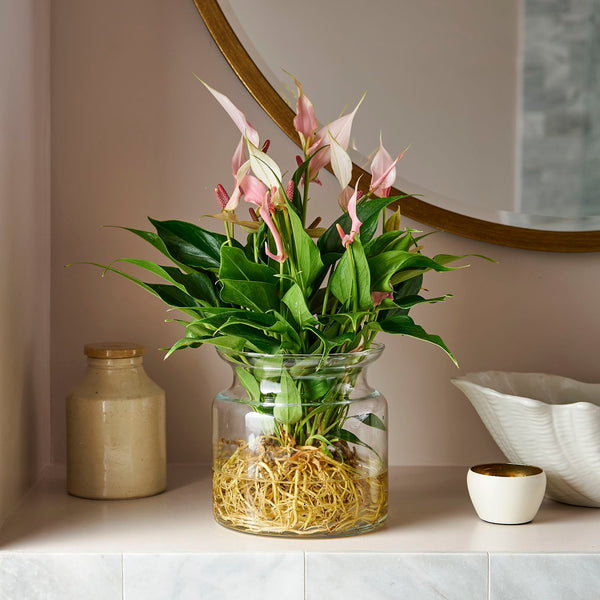
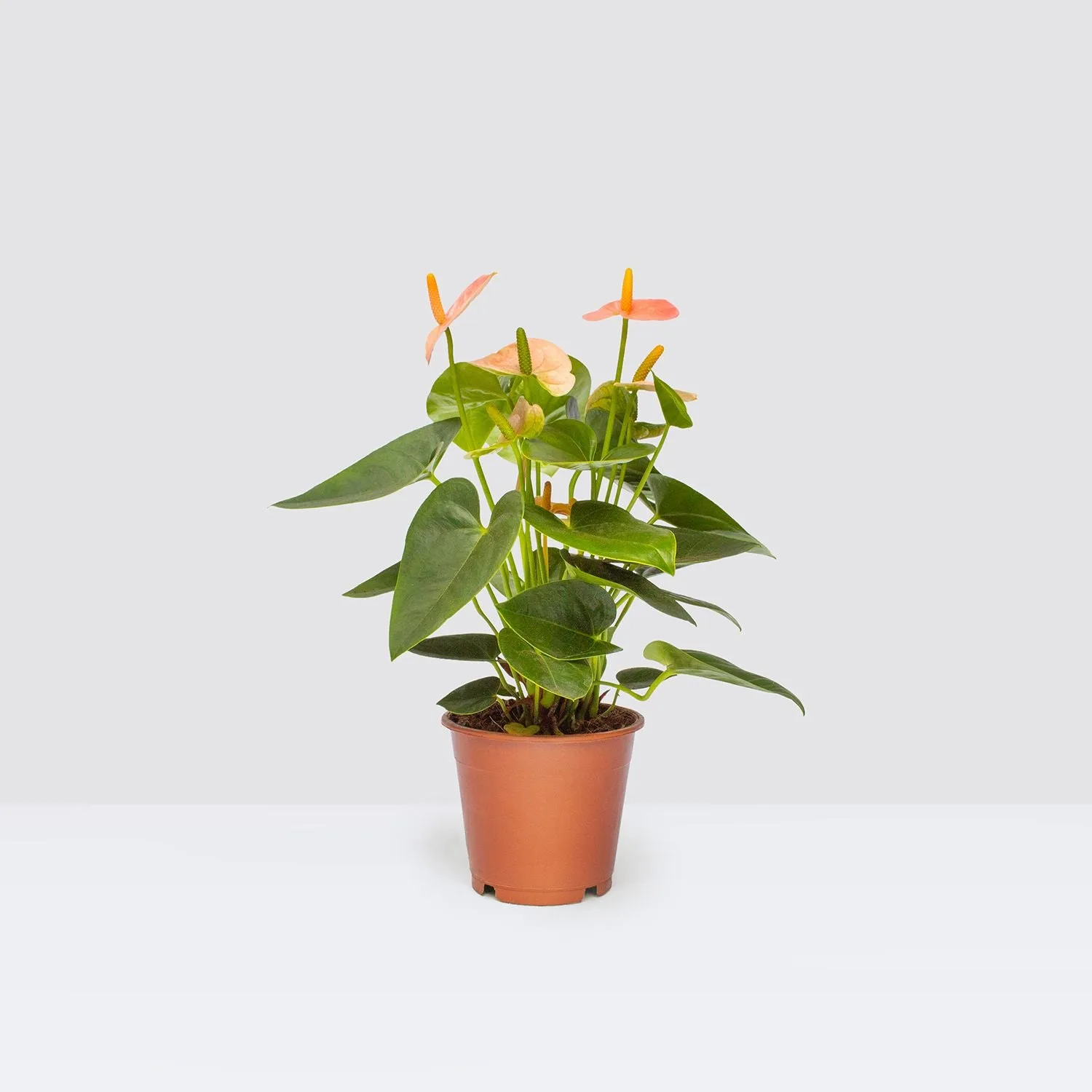
Anthurium ‘Lilli’ is one of the easiest flowering houseplants you can grow. Those waxy white ‘flowers’ can keep coming for most of the year, and the glossy dark leaves look good even between blooms. Give it the basics below and it’s a forgiving, long-lived companion.
About Anthurium ‘Lilli’
The anthurium, or flamingo flower, comes from the warm, humid forests of Central and South America, where it grows in dappled shade on the forest floor and up tree trunks. ‘Lilli’ is a compact, white-flowered variety that stays neat enough for a shelf, sideboard or desk. What looks like a flower is actually a glossy modified leaf called a spathe, with the tiny true flowers packed onto the pale spike (the spadix) in the middle.
How much light does my anthurium need?
Bright, indirect light is the sweet spot — about a metre back from a bright window, or right beside a north or east-facing one. In too little light it’ll survive but stop flowering; in harsh direct sun the leaves scorch and lose their colour. If yours has gone a while without a bloom, moving it somewhere brighter (but still out of direct sun) is usually the fix.
How often should I water my anthurium?
Water when the top 2–3cm of soil feels dry — roughly once a week in summer and less often in winter. Water it thoroughly until it runs from the drainage holes, let it drain fully, then tip away anything left in the saucer. Anthuriums hate soggy roots, so when in doubt it’s always safer to underwater than to overwater.
What's the best temperature for my anthurium?
Normal room temperature suits it perfectly, ideally between 18 and 24°C. Keep it away from cold draughts, radiators and unheated rooms — sudden swings and anything below about 15°C will make it sulk and drop its flowers.
Does my anthurium need any extra love?
As a tropical plant it loves a bit of humidity. Mist the leaves a few times a week, group it with other plants, or stand the pot on a tray of damp pebbles — a bright bathroom or kitchen is ideal. Feed with a liquid houseplant food once a month from spring to late summer to keep the flowers coming, wipe the glossy leaves now and then so they can breathe, and snip off each bloom as it fades to encourage the next one.
Is my anthurium toxic to pets?
Yes, mildly. Like all anthuriums, the leaves and stems contain calcium oxalate crystals that can irritate the mouth and stomach if chewed — unpleasant but rarely serious. Keep it up on a shelf or out of reach of curious cats, dogs and small children.
When should I repot my anthurium?
Every couple of years, or when you see roots creeping out of the drainage holes, move it into a pot a couple of centimetres bigger in spring. Use a light, airy mix — a peat-free houseplant compost loosened with a little bark or perlite keeps the roots happy and drains freely.